Faith-Based Homeless Providers and Data Inconsistency
Do you remember the scene from the West Wing with the flashback to a young Bartlet and Mrs. Landingham- Mrs. Landingham is trying to convince him to make a point with his father and he says, “if you want to convince me, show me the numbers!” Here it is:
Although the subject matter is unrelated, the point remains…
I have often discussed the American government’s shift from including Housing First model as one of the solutions to addressing homelessness to it becoming the only solution…as far as government spending and priorities go.
I noted one of the failures in this shift is the resulting exclusion of Faith-based service providers.
There are two primary reasons many Faith-based providers choose not to engage in government funding: 1. fear of government overreach into religious liberty issues such as hiring employees who share the same religious beliefs (of course, this concern existed long before funding barriers were presented-more on that in another post); and 2. Housing First prioritizes permanent housing over transitional housing and eliminates any program that requires participation in treatment and/or support services- two program components that are often fundamental to the success of faith-based operations.
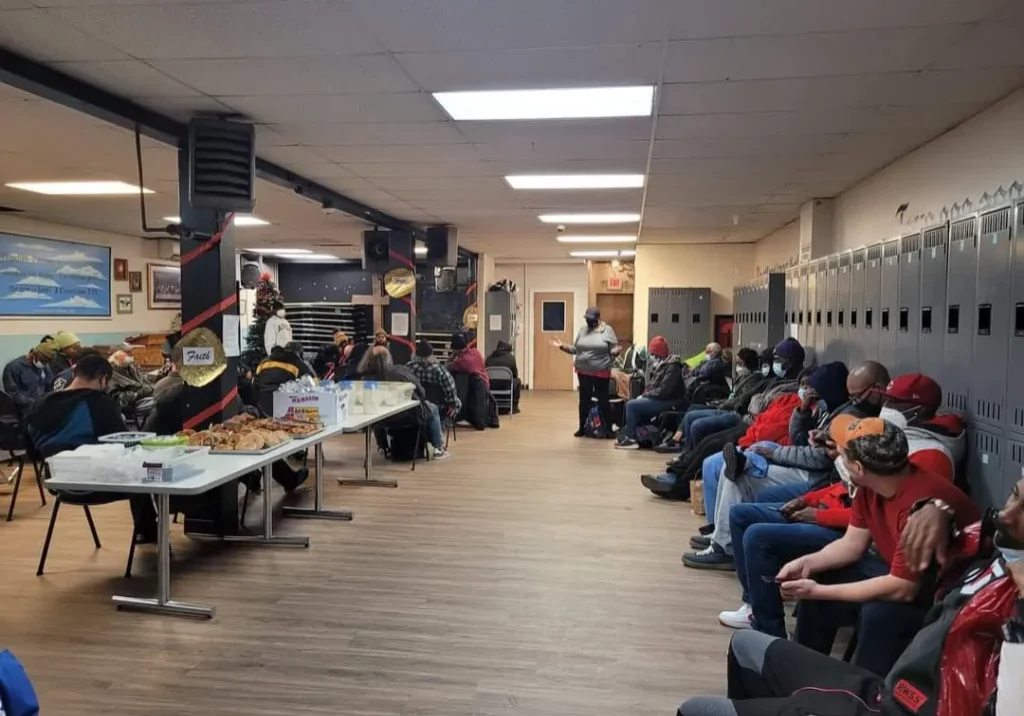
The general distancing between faith-based homeless service providers and government funding has created a monumental gap in the data narratives that determine local, state, and federal homelessness policies.
There are multiple reasons for this gap. Here are a few:
- HUD enforces the nation-wide use of a common data collection platform. Many faith-based providers and other providers who do not receive government funding do not participate in this platform. Some willingly share their data, others do not participate at all. This means the data behind thousands of programs is not included in national reports.
- Program-based housing models measure success differently than mainstream Housing First programs, and because they are not funded, the outcomes data is not represented collectively. For example, a Housing First program may claim a measure of success if 65% of their programs participants remained housed for six months. a Program-based housing model may claim success because 65% of their program participants found full-time employment upon program completion. Only the Housing First project is currently being counted and represented, beause the program model is not funded.
- In spite of the hundreds (if not thousands) of faith-based programs in operation, there is not (yet) a data system that reflects the collective impact of alternate programs and models.
In 2017, Baylor University released a study called “Assessing the Faith-Based response to Homelessness in America”. In this study of 11 cities, two of the six key outcomes state:
- Almost 60% of the Emergency Shelter Beds, what many consider the ‘safety net of all safety nets’ for the homeless, are provided through faith-based organizations.
- The program outcomes for successful participants from FBO Residential Recovery and Job Readiness programs in these eleven cities generate an estimated $119 million in taxpayer savings during the three years following program exit.
These findings touch on emergency housing and transitional housing (residential recovery programs)- two housing models that have experienced substantial decreases in both state and federal funding opportunities. And both of which are the primary programmatic methods in faith-based organizations. These numbers confirm the necessity for both.
The national conversation on addressing homelessness is based on incomplete data and this leads to misinformed policy.
It is critical for faith-based homeless service providers to tell their stories- the personal stories of lives transformed, and, yes, the “numbers” that reflect their outcomes and impact.
We cannot begin to effect policy changes until we can supplement the current narrative with the whole picture.